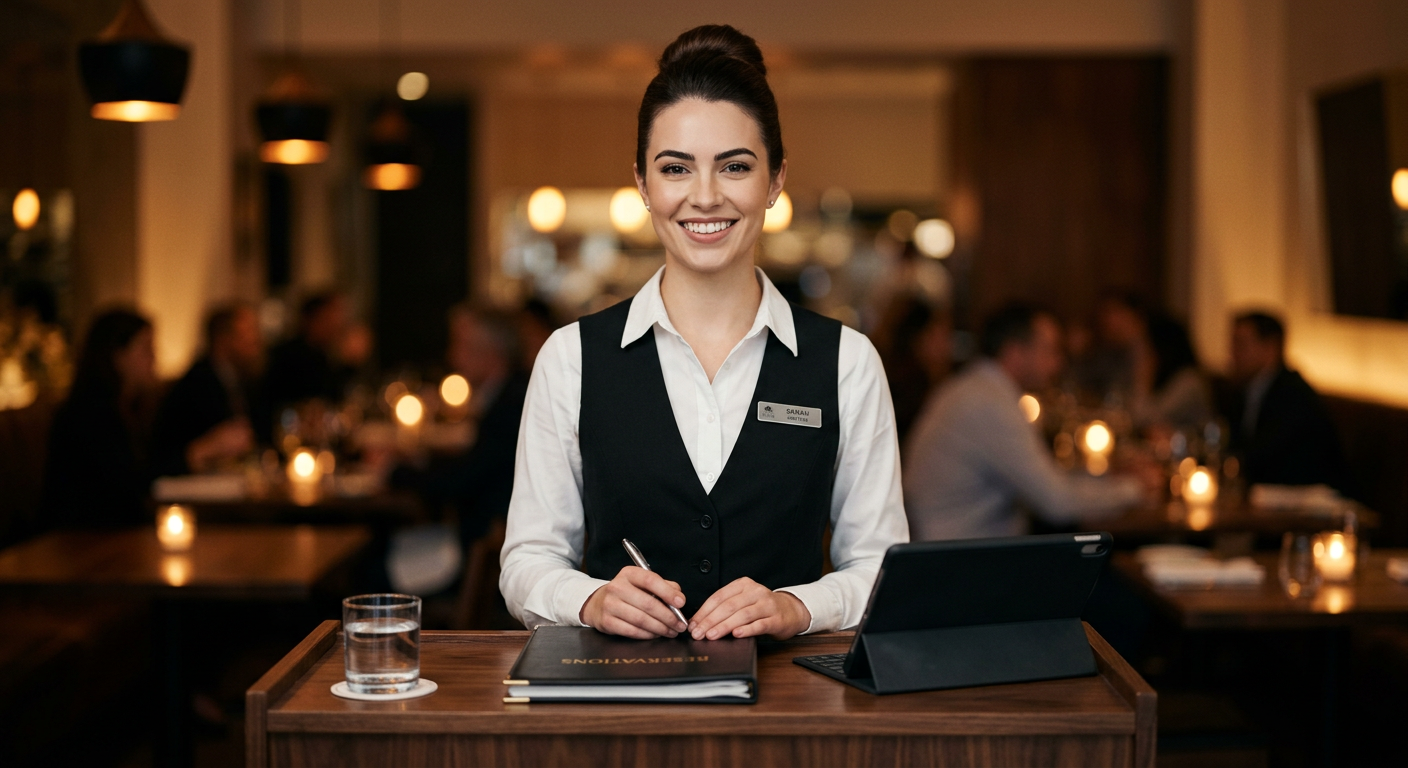
Ask any restaurant owner what "guest experience" means and they'll talk about the table: the greeting, the pacing of courses, the way a server reads the room. Almost nobody mentions the phone call that happened twenty minutes earlier — the one where a guest asked about a dietary restriction, or tried to book a table for six, or just wanted to know if the kitchen was still open. But that call is where the experience actually starts. And it's the moment most restaurants have the least control over.
Why the phone call is the real first impression
Hospitality brands spend enormous energy on the moments guests can see — the table setting, the lighting, the way a server describes the specials. Far less attention goes to the moment most guests actually experience first: the call where they ask if you take reservations, or whether the patio is open, or how spicy the curry really is.
That call sets an expectation before the guest has even left their house. A warm, unhurried, knowledgeable answer signals a restaurant that has its act together. A rushed one, a hold, or no answer at all signals the opposite — and it does so before the food, the room, or the service has had any chance to make a different impression.
Conversational AI built for hospitality exists largely to close this gap: not to replace the warmth of a great host, but to guarantee that the first moment of contact gets the same care as the moments that happen once a guest is seated.
The consistency problem human staff can't solve
Here's an uncomfortable truth about hospitality: even your best staff can't deliver the same experience on every call. Not because they aren't good at their jobs, but because consistency under pressure isn't really a skill — it's a function of how busy the room is at that exact moment. The host who's warm and unhurried at 4 PM is, understandably, shorter and more distracted at 7:45 PM. That's not a character flaw. It's what happens to anyone juggling six things at once.
Guests don't experience your restaurant in the aggregate — they experience the one call they made, at whatever moment they happened to call. A guest who calls during a lull gets your best version. A guest who calls during the rush gets whatever's left over. Over time, that variability is what guests remember, even if they can't quite articulate why one restaurant "feels" more put-together than another.
Voice AI doesn't get tired, distracted, or short on a Friday night. It gives the fourth caller of a packed dinner service the same attentive tone as the first caller of a quiet Tuesday lunch. That's not a replacement for hospitality — it's the thing that makes hospitality reliable instead of dependent on how the shift happens to be going.
Phone rings four times. Whoever's closest answers while doing something else, voice clipped, half-listening. Caller has to repeat themselves. Call ends in under 30 seconds, more relief than hospitality.
Answered on the first ring, full attention, no background noise. Same warm tone whether it's the kitchen's busiest minute or its quietest. Caller gets a complete, unhurried answer — every time.
Does it actually feel robotic to guests?
This is the objection every restaurant owner raises, and it's a fair one. Hospitality is built on warmth, and "AI answering the phone" sounds like the opposite of that. The honest answer is: it depends entirely on what kind of system is actually answering.
Older automated phone systems earned that reputation honestly. "Press 1 for hours, press 2 for reservations" forces the caller to adapt to the machine — translate what they actually want into a menu of pre-set options. That's where the robotic feeling comes from: rigid menus, not the underlying idea of automation itself.
Modern conversational voice AI works the opposite way. It's built to understand how people actually talk — including when they change their mind mid-sentence, interrupt, or ask something the system wasn't explicitly scripted for — and respond in plain, natural language instead of routing them through a decision tree.
Used well, voice AI doesn't replace hospitality. It protects it — by making sure the first conversation a guest has with your restaurant gets full attention, every time, regardless of how busy the room is.
Where voice AI changes the guest journey
It's easier to see the impact by walking through the actual moments where a guest interacts with a restaurant before, during, and after a visit — and noticing how many of them start with a phone call.
The exploratory call
"Are you open Sunday? Do you take walk-ins? Can you do a table for eight?" These calls shape whether a guest shows up at all — and they're the ones most likely to go unanswered during a normal shift.
The booking
Checking availability and confirming a reservation accurately, without a double-booking or a misheard time, is the first concrete promise a restaurant makes to a guest.
The to-go order
A guest ordering for pickup wants to feel like their order was heard correctly — read back, confirmed, no surprises when they arrive. This is the moment that builds or breaks trust in a restaurant's ordering process.
The after-hours question
Someone planning tomorrow's dinner calls at 10 PM to check the menu or hours. A restaurant that answers that call — even automatically — feels more present than one that doesn't.
Standing out without changing your menu
Most independent restaurants compete on food, price, and location — three things that are genuinely hard to change quickly. Guest experience is one of the few levers an owner can pull immediately, without touching the menu or the lease.
In a market where most independent competitors are still routing rush-hour calls to voicemail, a restaurant that answers every call instantly, with full attention, stands out — not because of flashy technology, but because guests notice the absence of friction more than they notice its presence. Nobody writes a review praising a restaurant for answering the phone. But plenty of guests quietly choose the place that did.
That differentiation compounds. A guest who has a smooth, attentive phone experience arrives already favorably disposed toward the restaurant — which makes the in-person experience that much easier for staff to build on.
This is what a guest actually hears
The best way to judge whether voice AI feels warm or robotic is to listen to it handle a real conversation. Watch the 45-second demo, or call the live line and try it yourself.
What this looks like with Aria
Aria, the AI phone agent built by 5 to 9 Agents, is designed around exactly this idea — that the phone is part of the guest experience, not separate from it. None of the features below are extras layered on top. For the first phone impression to actually feel like good hospitality, every one of these is essential:
The most realistic voice available
Aria sounds like a real person — warm, natural, never robotic, always respectful and helpful. She answers instantly, so no guest ever hears a phone ring out.
Full orders, reservations & bookings
Aria takes the complete order and confirms every item before it reaches your kitchen. For reservations, she checks availability, books the table, and confirms party size in real time — exactly what a great host would do.
Real-time order dashboard
A custom dashboard ships with Aria, so your staff sees every order and reservation live and can move status from New → In Kitchen → Ready → Completed with a tap.
Confident answers to every question
Menu, hours, directions, parking, dietary options, specials — Aria knows your restaurant and answers with the same confidence a longtime host would.
Instant SMS confirmation
Every order and reservation gets a text the moment the call ends, so the guest leaves the conversation certain it's locked in — the same reassurance a good host gives in person, just in writing.
Customized to your restaurant
Not a generic hospitality script — Aria is trained on your actual menu, your hours, and your policies, and answers every call your team simply can't get to.
Ongoing support, included
Menu changes, new hours, seasonal specials — 5 to 9 Agents keeps Aria current for you. You're never managing this alone.
iPad + dedicated number, ready day one
Your current phone number stays exactly the same — calls simply forward to a dedicated line. A fully configured iPad arrives ready to use, no new hardware to learn.
The goal isn't a restaurant that sounds automated. It's a restaurant where every guest, on every call, gets the version of hospitality the restaurant is actually capable of — not just whatever's left over during the rush.
Frequently asked questions
This article reflects general patterns observed across hospitality and restaurant technology reporting on guest experience, consistency, and conversational AI adoption. Specific outcomes vary by restaurant and implementation, and figures referenced are industry-reported context rather than guarantees of results for any individual business.